
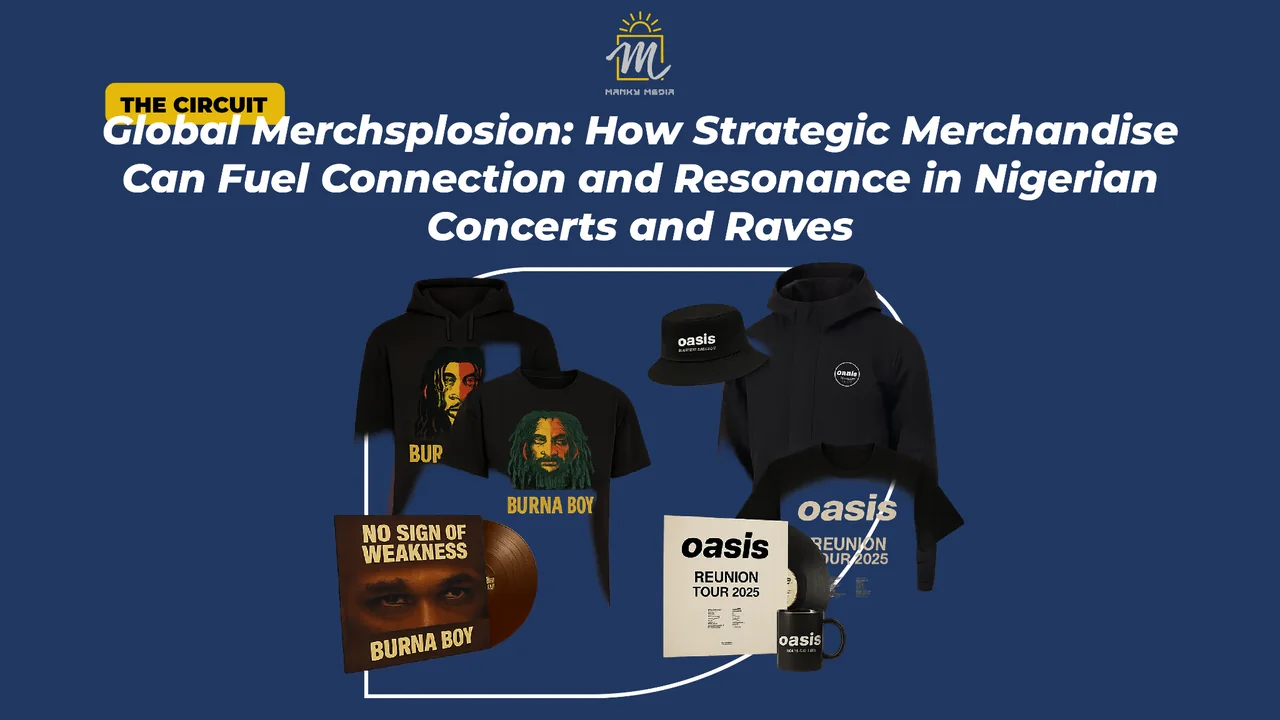
The global music landscape is witnessing what we can call a merchsplosion: a shift where merchandise is no longer treated as a random souvenir at the end of an event, but as a powerful extension of identity, connection, memory, and brand resonance.
For Nigerian concert organizers, rave curators, event promoters, and artists, this is not just an international trend to admire from afar. It is a major opportunity.
Merch can deepen audience engagement, open new revenue streams, strengthen fan identity, and help an event or artist live beyond one night of performance.
At Manky Media, we believe the future of live music experiences will not only be about who performed, who attended, or which DJ shut down the night. It will also be about what people carried home physically, emotionally, and culturally.
Beyond the Beat: Why Merch Is the New Mover
In an increasingly digital world, physical touchpoints have become more valuable.
Music lives on streaming platforms. Event memories live in camera rolls. Announcements happen on social media. But merchandise gives fans something tangible — something they can touch, wear, frame, collect, gift, or keep as proof that they were part of a moment.
A concert tee, cap, wristband, tote bag, poster, hoodie, scarf, or limited-edition item can become more than a product. It becomes a badge of belonging.
For fans, merch can say:
- I was there.
- I believe in this artist.
- This event represents my kind of people.
- This sound, this culture, this community is part of my identity.
That is why merchandise should not be treated as an afterthought. It is part of the experience design.
The Global Blueprint: From Band Tees to Lifestyle Worlds
Globally, music merchandise has evolved from basic logo shirts into full lifestyle systems.
Bands like Oasis helped show how simple visual identity — a recognizable logo, a strong era, a clear fan movement — could turn T-shirts and posters into cultural signals. Their merch did not only represent the band. It represented a feeling, an attitude, and a generation of fans who wanted to wear that identity proudly.
Today, artists are pushing this even further. Merch now includes premium streetwear, vinyl, accessories, collector items, limited drops, pop-up exclusives, tour-specific designs, and products that extend the story of a project.
Burna Boy is a useful African example of this wider shift. His artist identity has always extended beyond sound into fashion, posture, visuals, language, and cultural statement. From the African Giant era to later project and tour identities, his merch ecosystem reflects how an artist can turn music into a lifestyle that fans can physically participate in.
The lesson is clear: merch works best when it feels connected to the artist’s world, not when it feels like a random logo placed on fabric.
The Nigerian Opportunity
Nigerian concerts and raves already have the energy, style, language, and community needed for strong merchandise culture.
Our events are not boring. The fashion is loud. The slang is alive. The audience is expressive. The music carries identity. The visuals are colourful. The culture already knows how to turn moments into movements.
The missing link is often strategy.
Too many events still treat merch as something optional, rushed, generic, or only for big-budget concerts. But even smaller events can build smart merchandise systems when the idea is planned early and connected to the event’s identity.
Designing Merch That Reflects Brand and Culture
For Nigerian artists and event organizers, the goal should not be to copy foreign tour merch directly. The stronger move is to build merchandise that reflects the local culture, the artist’s message, and the emotional experience of the event.
1. Beyond the basic tee
T-shirts are useful, but they should not be the only idea.
Event organizers can explore caps, scarves, tote bags, wristbands, face towels, bucket hats, enamel pins, phone grips, sticker packs, lanyards, fan cards, bandanas, hoodies, jerseys, and limited posters.
The product should match the event. A rave may need items that are bold, wearable, and camera-friendly. A listening party may need more intimate collectibles. A concert may need statement pieces that can be worn long after the show.
2. Culturally infused collectibles
Nigerian merch should not be afraid of Nigerian identity.
There is room for designs inspired by local slang, adire patterns, street signs, city references, pidgin phrases, album lyrics, traditional symbols, nightlife language, danfo aesthetics, campus culture, or regional pride.
The key is to make it tasteful and intentional. Culture should not be added lazily. It should feel like it belongs to the artist, the event, and the audience.
3. Storytelling and interactive merch
The best merch can also carry story.
A shirt can include a lyric that means something to the fans. A poster can carry the date and location of a special night. A wristband can unlock a private playlist. A QR code can lead to behind-the-scenes footage. A limited item can mark the first edition of an event series.
This is where merchandise becomes media. It does not only exist as a product. It continues the narrative.
Merch as Revenue, Memory, and Marketing
Merchandise can support an event in three major ways.
Revenue
Merch can create an additional income stream beyond ticket sales, sponsorships, bar splits, or artist fees. For independent organizers, this can help reduce pressure and create more flexible event budgets.
Memory
Events are temporary, but merch extends the life of the experience. A person may forget the exact order of performances, but they can keep a shirt, poster, or wristband for years.
Marketing
Every fan wearing the merch becomes a moving billboard. When the design is strong, people ask questions. They take pictures. They post it. They bring the event into new spaces.
The Real Goal
The best merchandise does not scream “buy me.” It quietly says, “you are part of something.”
That is where merch becomes more than product. It becomes culture.
Manky Media’s Blueprint for Resonant Merch
Effective merch strategy goes beyond good design. It requires a clear understanding of the artist, the event, the audience, and the story being told.
Authenticity
The merch must genuinely reflect the artist’s brand or the event’s energy. Forced or generic designs will not connect deeply.
Quality
Fans are investing in a piece of the experience. The quality of the material, print, packaging, and presentation should protect the value of the brand.
Scarcity and exclusivity
Limited drops, early access, numbered editions, VIP-only items, or event-only designs can increase emotional and collectible value.
Digital integration
Merch should connect with the digital rollout. Teasers, design polls, behind-the-scenes videos, pre-order forms, lookbook photos, fan reposts, and e-commerce links can all build demand before the event.
Fan-centric design
Sometimes the audience can help shape the product. Polls, comment suggestions, fan art features, and community input can make supporters feel involved before the merch even drops.
Practical Merch Ideas for Nigerian Events
- Listening party: lyric cards, signed posters, limited tees, wristbands, project-themed tote bags.
- Rave: neon wristbands, caps, reflective tees, sticker packs, photo-friendly scarves or bandanas.
- Concert: tour tees, hoodies, city-edition posters, VIP lanyards, collectible passes.
- Creative workshop: notebooks, tote bags, branded pens, participant badges, resource cards.
- Festival: multi-artist merch bundles, sponsor-integrated items, limited edition festival posters.
The Partnership Opportunity
Merchandise can also become a partnership tool.
Nigerian event organizers can collaborate with fashion designers, local printers, visual artists, photographers, beverage brands, lifestyle stores, campuses, lounges, and creative collectives to produce merch that feels bigger than the event itself.
For example, a lounge hosting a listening party could co-brand a limited item with the artist. A fashion designer could create a small capsule collection around a concert. A photographer could sell event photo prints. A beverage partner could sponsor collectible cups, wristbands, or access cards.
This approach reduces cost pressure while creating more value for partners, artists, and fans.
Final Thought
The merchsplosion is really about the evolving relationship between artists, events, and audiences.
Fans no longer want to only consume music or attend events. They want to belong. They want to show identity. They want to remember. They want to carry a piece of the experience with them.
For Nigerian artists, concert organizers, rave curators, and creative brands, merchandise is an opportunity to deepen connection, diversify revenue, and build cultural memory.
At Manky Media, we do not see merch as just clothing or accessories.
We see it as storytelling, community, design, strategy, and culture in physical form.
That is the real power of strategic merchandise.
Reference Notes
Examples of active artist merchandise ecosystems can be seen through official artist stores and merch platforms.
Useful references: Burna Boy Official Store and Oasis Official Store.